Hang in there baby!
Revelation 2:7 (NASB)
7'He who has an ear, let him hear what the Spirit says to the churches. To him who overcomes, I will grant to eat of the tree of life which is in the Paradise of God.'
Most likely at some time in your Christian life you have heard a sermon about being an over comer. I find it very interesting that the word here "overcomes" in the Greek is the English word for subdue, conquer. Now if you just happen to have a dictionary handy take at look at the definition for both words. It might surprise you to find out that they mean to take something by force. The exact definition in my dictionary is to "put down by force." With this in mind I want to look at the seven churches found in Revelation and compare them to our lives and hearts.
In six of the seven churches described in Revelation chapters 2 and 3 we see a warning and then a promise. Each promise begins with he who conquers. Before we go any further I want you to notice something very important in each of the seven churches. Christ is describing a religious organization. With each instance He is talking to a body in Christ. In the Greek the word church means to be called out. But even in today's dictionary it is defined as "one of the groups of Christians who have their own beliefs and forms of worship." Notice even the latest dictionary does not speak of a building but a group of individuals with the same ideas and beliefs. Examples of this in today's world would be the Assemblies of God, the Baptists, the Episcopalians, the Catholics. These are bodies of individuals with their own form of worship and ideas.
But what I want you to notice and this is very, very important to your eternal salvation. The promise in each of the 6 churches that Jesus condemns is "to he who". This is individual, personal, one on one. Jesus is saying to the one conquering I will do the following. Again what I have been trying to say for years my friends is that it is not your "religious preference" that will get you to heaven. It is if you personally conquer the things in life you need to. What matters is your personal relationship with Jesus not your church. Six times Jesus shows us in Revelation the need for the personal relationship not the religion. Lets look at each promise from each church and see if we can find the pattern.
The Church of Ephesus was what most Christians today would call an alright church. They would test the false teachers and not put up with them. They were workers for the Lord but for the wrong reason. On first glance most of us would say that the church of Ephesus is like any corner church of small town America, just alright. They were inclusive and would not put up with what they considered false doctrine. They are active in the community with their after school programs etc. But what does Jesus have against them. Jesus tells them that they have left their first love. Jesus is very harsh, return, repent or He will come quickly and remove their candlestick from the seven in Heaven. Remember at the beginning of this discussion of the Church of Ephesus Jesus reminds them that He is the holder of the seven stars and seven candlesticks. Now comes the promise,
Revelation 2:7 (KJV) 7He that hath an ear, let him hear what the Spirit saith unto the churches; To him that overcometh will I give to eat of the tree of life, which is in the midst of the paradise of God. You cannot read this any other way but that Jesus is telling the individuals that are stuck in this religious body that if they overcome and return to their first love they will be partaking of the tree of life in the middle of heaven. In other words they will be saved, they will be in heaven not hell for eternity. But again notice it was their personal overcoming that did this not their religious group.
Continuing on to the Church at Smyrna. This church is really given the greatest gift both before and after judgment. Jesus knows what they are about to suffer and He knows it is because they follow Him. The people in the church of Smyrna are suffering, they live in poverty, they are slandered for their faith and some are being thrown into prison for their belief in Jesus. The Greek here for suffering is èëßøéò thlipsis thlip'-sis pressure (literally or figuratively):-afflicted, (-tion), anguish, burdened, persecution, tribulation, trouble. The Greek here for poverty is ðôù÷åýù ptocheuo pto-khyoo'-o to be a beggar, that is, (by implication) to become indigent (figuratively):-become poor.
Lets just take a look at these two. This church is afflicted, burdened, persecuted. They are beggars and are indigents or homeless. Through this they remain faithful. Yet, Jesus tells them they are rich. He does not just tell them they are rich but they are abundantly rich. Think about it my friends, would you stay true to Jesus if you were in the situation of this church? How many of us have even missed a meal for Jesus in America? I cannot count how many prayer requests we get from "Christians" that are wanting to throw in the towel and some who are threatening to kill themselves over the smallest things. I hate to believe it but I have a gut feeling that many churches would be empty if true percussion happened to the church today.
Yet again Jesus tells them he who conquers, overcomes will not be hurt by the second death. What does Jesus mean here. We are told by the author of Hebrews that we die only once. Hebrews 9:27 (NLT) 27And just as it is destined that each person dies only once and after that comes judgment, Therefore, Jesus is talking about judgment and the second death or the punishment of spending eternity in hell. Jesus tells the Church here "Remain faithful even when facing death, and I will give you the crown of life." Be faithful to what? Be faithful to Jesus, not rules, not regulations, not religions but Jesus.
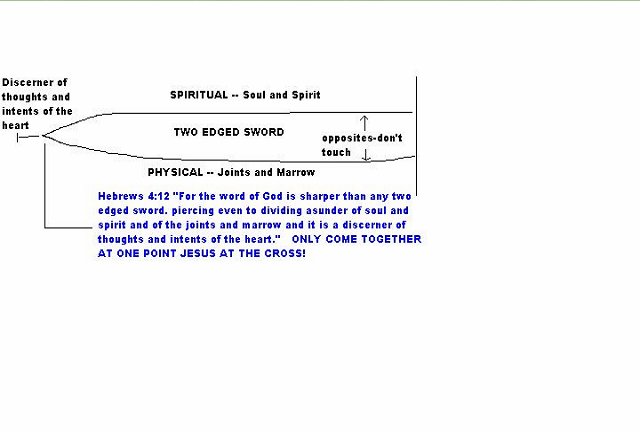
At the church of Pergamum things start to get really messy. We start out with a warning. Jesus is described as the two edged sword. Gods word is too great here we see a church that is involved directly in a physical sin and Jesus is described as having a two edged sword. Look at the what the author of Hebrews says about the word